
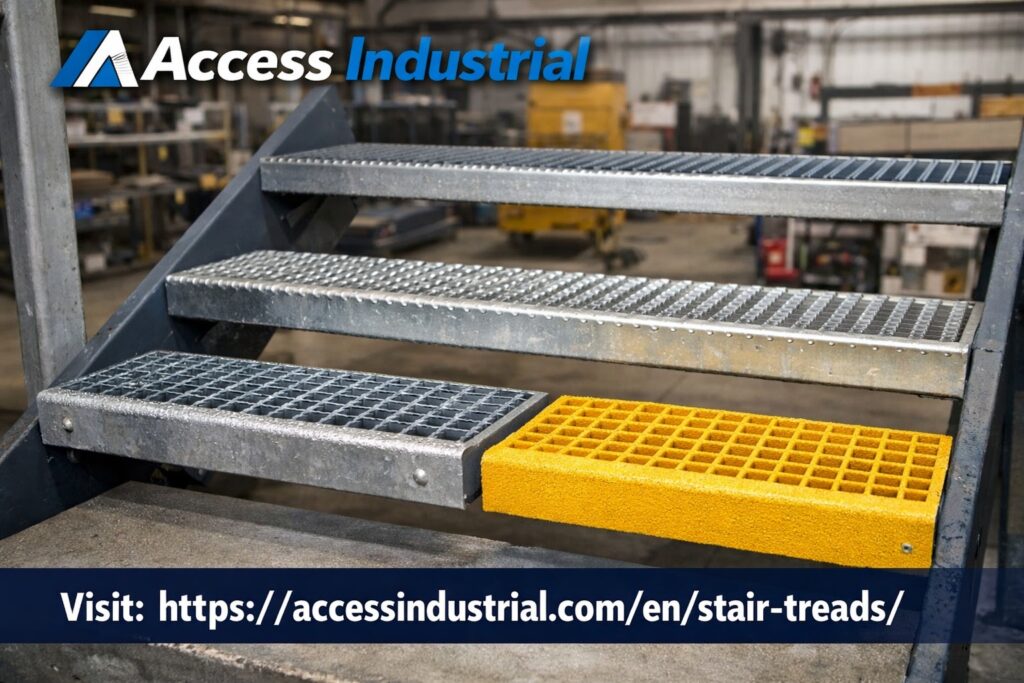
Fiberglass stair treads are anti-slip step covers made from fiberglass reinforced plastic (FRP), designed to improve stair safety in industrial and outdoor environments. They offer superior slip resistance, corrosion protection, and durability compared to metal or wood, making them ideal for preventing workplace accidents in high-risk conditions.
Why Are Fiberglass Stair Treads Critical for Workplace Safety?
Slip-and-fall incidents remain one of the leading causes of workplace injuries globally. In industrial environments, stairs are one of the highest-risk zones—especially when exposed to water, oil, or chemicals.
From what I’ve seen across industrial flooring projects, stair safety is often reactive instead of proactive. Fiberglass stair treads solve this problem at the source.
They don’t just “cover” stairs—they transform them into high-grip, hazard-resistant surfaces.
👉 That shift—from surface to safety system—is what makes them essential.
What Are Fiberglass Stair Treads and How Do They Work?
Fiberglass stair treads are manufactured using fiberglass reinforced plastic (FRP), a composite material known for its:
- High strength-to-weight ratio
- Corrosion resistance
- Non-slip surface compatibility
Each tread is typically coated with industrial-grade grit, creating friction that significantly improves traction—even in extreme conditions.
🧱 Core Function:
They act as a protective, anti-slip layer installed over:
- Concrete stairs
- Metal staircases
- Wooden steps
Why Are Fiberglass Stair Treads Better Than Steel or Wood?
This is where most buyers underestimate the difference.
⚠️ Steel Stair Limitations
- Becomes slippery when wet
- Corrodes over time
- Requires frequent maintenance
⚠️ Wooden Stair Limitations
- Absorbs moisture → rot risk
- Wears down under heavy traffic
- Limited grip
✅ Fiberglass Advantage
| Feature | Fiberglass | Steel | Wood |
|---|---|---|---|
| Slip Resistance | Excellent | Low (wet) | Moderate |
| Corrosion Resistance | High | Low | Low |
| Maintenance | Low | High | Medium |
| Lifespan | Long | Medium | Short |
👉 In high-risk environments, fiberglass isn’t just better—it’s safer by design.
How Do Fiberglass Stair Treads Improve Safety in Real Conditions?
🦺 1. Slip Resistance in Hazardous Environments
The grit-coated surface provides traction even in:
- Oil spills
- Rainwater
- Dust-heavy areas
👁 2. High Visibility for Accident Prevention
Many treads come in bright colors (yellow, black), improving step-edge visibility.
🏭 3. Compliance with Safety Standards
Fiberglass treads help align with OSHA safety recommendations for slip prevention in workplaces.
👉 (Add external link: OSHA stair safety guidelines)
📊 Data Insight
Workplace studies consistently show that slips, trips, and falls account for a significant portion of industrial injuries, especially on stairways and walkways.
👉 Improving traction directly reduces incident probability.
What Types of Fiberglass Stair Treads Are Available?
Choosing the right type depends on your application.
🧱 Molded FRP Stair Treads
- Best for chemical-heavy environments
- Strong corrosion resistance
🏗 Pultruded Fiberglass Treads
- High load capacity
- Ideal for heavy industrial use
🔧 Covered (Retrofit) Stair Treads
- Installed over existing stairs
- Quick safety upgrade
🪜 Grating Stair Treads
- Open design for drainage
- Perfect for outdoor and wet conditions
📊 Type Comparison Table
| Type | Best Use Case | Strength | Drainage |
|---|---|---|---|
| Molded | Chemical plants | High | Medium |
| Pultruded | Heavy industry | Very High | Low |
| Covered | Retrofit | Medium | Low |
| Grating | Outdoor | High | Excellent |
Where Are Fiberglass Stair Treads Used Most Effectively?
🏭 Industrial Facilities
Heavy machinery environments require durable, anti-slip access systems.
🛢 Oil & Gas Sector
Corrosion resistance is critical due to harsh chemicals and weather.
🧪 Chemical Plants
Fiberglass resists chemical degradation better than metal.
🌧 Outdoor Installations
Perfect for rain-exposed staircases where slip risk is high.
🏢 Commercial Spaces
Used in areas requiring long-term safety with minimal maintenance.
How Do You Choose the Right Fiberglass Stair Treads?
This is where most buying decisions fail—lack of evaluation.
⚖️ 1. Load Capacity
Match tread strength with expected traffic and weight.
🌧 2. Environment Type
- Wet/oily → High-grit surface
- Chemical → Molded FRP
- Outdoor → UV-resistant
🧩 3. Installation Requirement
- Existing stairs → Covered treads
- New build → Grating/pultruded
🎯 4. Safety Visibility
Use high-contrast colors in high-risk zones.
What Are the Key Benefits of Fiberglass Stair Treads?
✅ Core Advantages
- Superior slip resistance
- Corrosion and chemical resistance
- Lightweight but strong
- Long lifespan (10+ years)
- Low maintenance
Are There Any Limitations You Should Consider?
❌ Potential Drawbacks
- Higher upfront cost
- Requires correct installation
- Limited design variety (in industrial use)
👉 However, in safety-critical environments, these are trade-offs—not deal-breakers.
What Is the Cost of Fiberglass Stair Treads in 2026?
💸 Pricing Overview (India)
- Standard treads → ₹1,500 – ₹3,500
- Industrial-grade → ₹3,500 – ₹8,000+
📈 Total Cost of Ownership Insight
Traditional Materials:
- Frequent repairs
- Higher accident risk
- Maintenance costs
Fiberglass:
- Longer lifespan
- Lower maintenance
- Reduced liability risk
👉 Over time, fiberglass delivers higher ROI + lower risk exposure.
🧠 Quick Buyer Decision Guide
👉 Choose fiberglass stair treads if:
- Your environment is wet, oily, or chemical-prone
- Safety compliance is required
- You want long-term durability
👉 Consider alternatives only if:
- Budget is extremely limited
- Usage is low-risk and temporary
🔍 Frequently Asked Questions
What are fiberglass stair treads used for?
Fiberglass stair treads are used to improve stair safety by adding a slip-resistant surface. They are commonly installed in industrial, commercial, and outdoor environments to prevent slips and falls.
Are fiberglass stair treads slip-resistant?
Yes. They feature grit-coated surfaces that provide strong traction, even in wet, oily, or dusty conditions.
How long do fiberglass stair treads last?
Fiberglass stair treads typically last 10+ years with proper installation and minimal maintenance.
Can they be installed over existing stairs?
Yes. Covered FRP stair treads are designed specifically for retrofitting existing stairs.
Are fiberglass stair treads better than steel?
Yes, in most industrial environments. Fiberglass offers better slip resistance, corrosion protection, and lower maintenance compared to steel.
About AccessIndustrial
At Access Industrial, we specialize in delivering top-notch industrial products and services to meet the diverse needs of our clients. Our mission is to provide innovative, reliable, and cost-effective solutions that empower businesses to achieve peak performance in their operations.